AI in airport operations: what ATL, DFW and Flox leaders say it has to prove
Insights
Insights
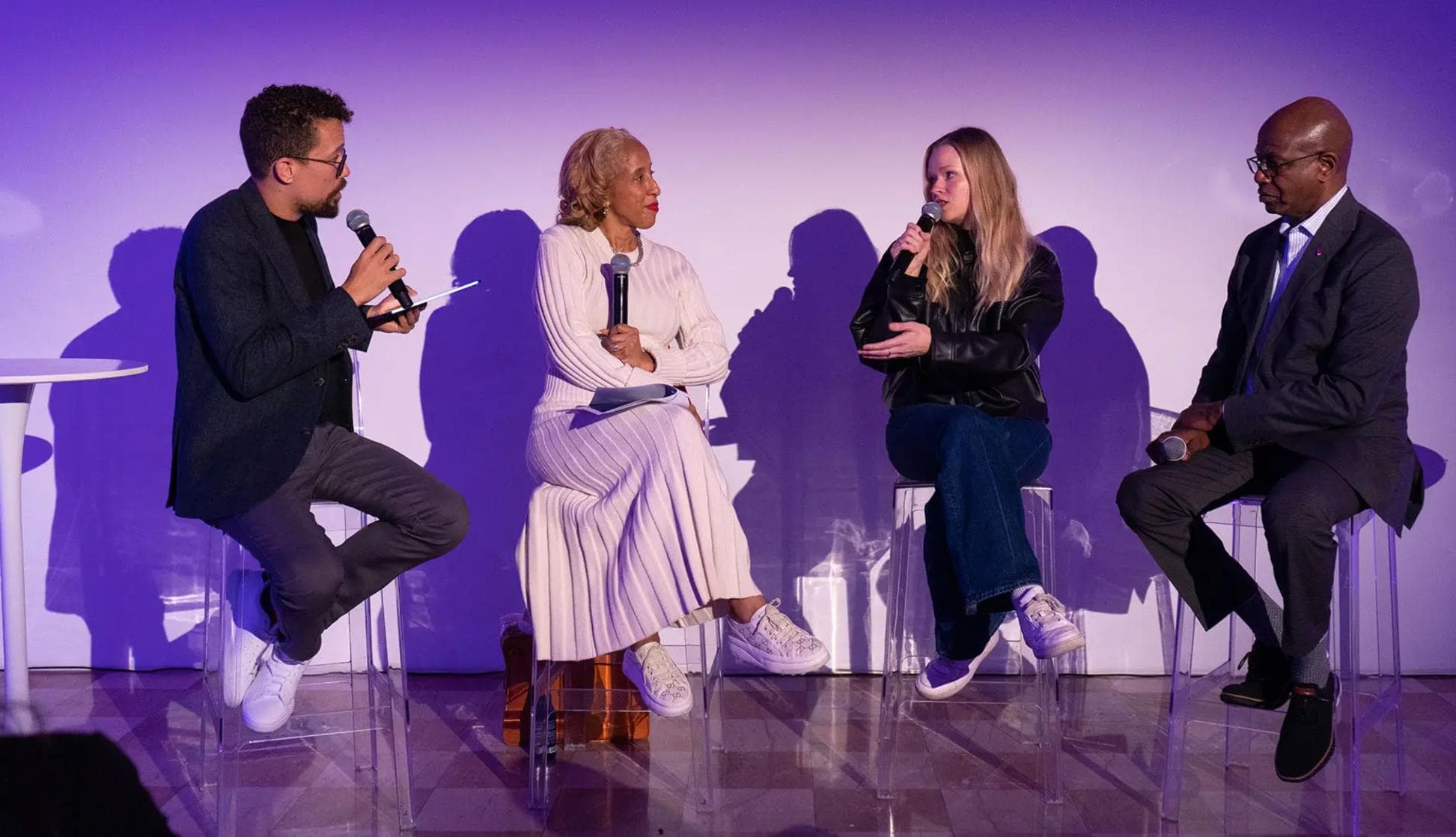
What does it take for AI to work inside a real airport? That was the question behind “AI on the tarmac,” a panel at Evolve 2026 in Miami, the summit series run by Sand Technologies that brings leaders, policymakers, technologists and creators together to talk about how AI can solve real-world problems. Ricky Smith, CEO of Hartsfield-Jackson Atlanta International Airport (ATL), the busiest airport in the world, joined Justina Mann, former vice president at Dallas Fort Worth International Airport (DFW), and Sára Nožková, CEO and co-founder of Flox. Spencer Horne, founder and CEO of Cloudline, moderated.
More than 300 leaders came to Evolve 2026 to talk about making AI work in the systems the world depends on, and airports fit that brief well. They are some of the most data-rich places on the planet, and most of that data still goes unused. Over 37 minutes the panel covered winter storms, budget scoring, ownership structures and animals on runways. The answers kept coming back to people and process. Airports have ideas and they have data. What slows new tools down is the route through planning cycles and procurement, followed by the slower work of earning trust on the airfield. Watch the full session here or read our takeaway below.
The short version
Airports struggle most with forecasting and planning for rare events, said Justina Mann, because equipment that sits idle for years is the first thing cut when budgets get tight.
Ricky Smith treats snow readiness as an insurance policy. Delta lost $60 million on a single Atlanta snowstorm a year earlier, he said, and he believes around $5 million in airport equipment would have made that number much smaller.
Ownership structure shapes how fast new technology arrives. Airport authorities like DFW have more room in procurement and contracting than city-owned airports like ATL.
For AI to be trusted at scale, Sára Nožková said it first has to be as good as the people doing the job today, and then better. That depends on learning from each airport’s wildlife and safety teams.
Animals get used to pyrotechnics and trained falcons within days. Flox uses AI and bioacoustics to send signals wildlife keeps responding to, starting at an airport’s worst hot spots.
Who was on the panel
Ricky Smith is general manager and CEO of Hartsfield-Jackson Atlanta International Airport, which handles about 108 million passengers a year and is working on a master plan for 160 million. He joined ATL in 2025 after almost ten years as executive director and CEO of the Maryland Aviation Administration, which runs Baltimore/Washington International Thurgood Marshall Airport (BWI). Before that he led the Cleveland Airport System, responsible for Cleveland Hopkins International and Burke Lakefront airports.
Justina Mann is the former vice president at Dallas Fort Worth International Airport. Her career has taken her through ATL and the Houston airport system as well, so she has worked inside city-owned airports and airport authorities.
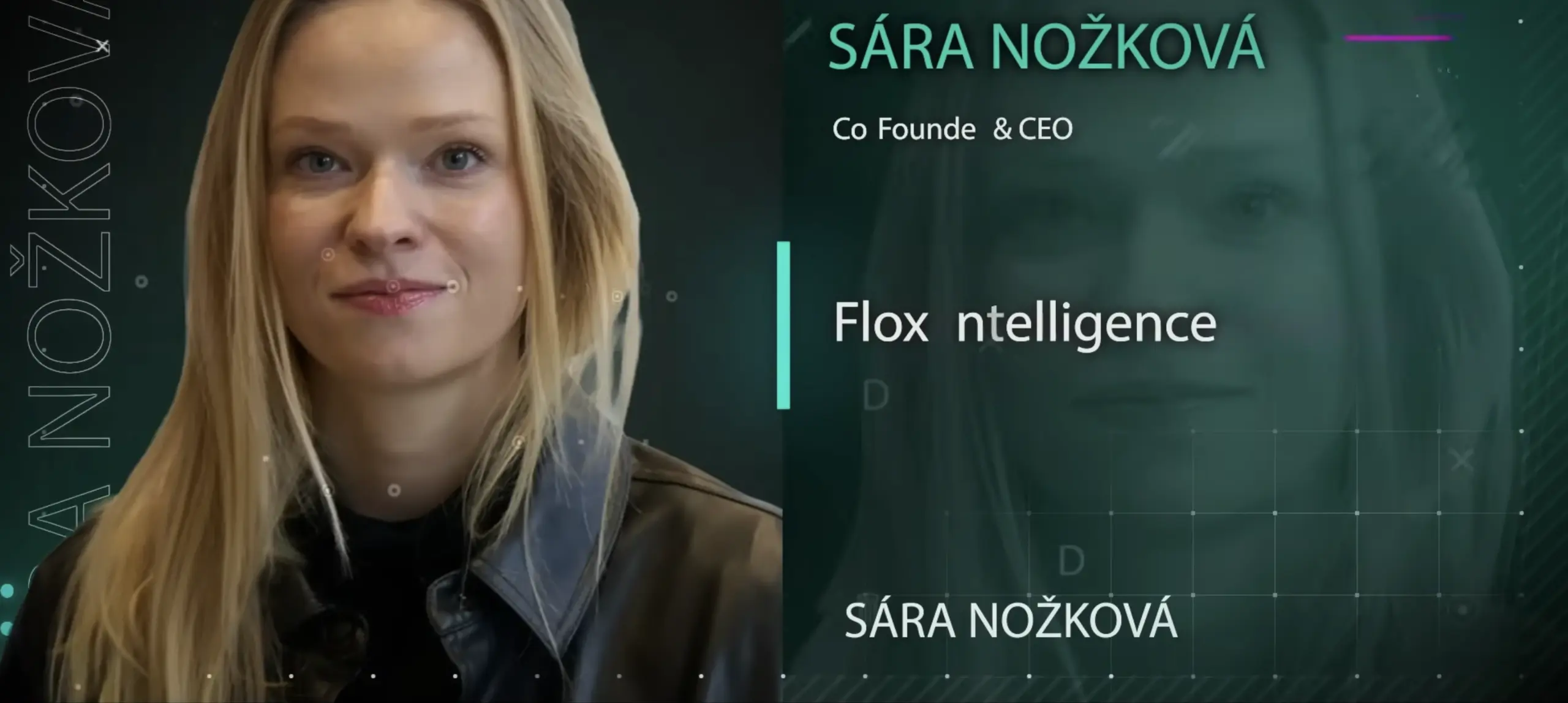
Sára Nožková is CEO and co-founder of Flox Intelligence, which uses edge AI and bioacoustics to keep wildlife away from runways, rail lines, roads and farms. Flox works with wildlife and safety teams at airports including Denver International and Gerald R. Ford International.
Spencer Horne is founder and CEO of Cloudline and, by his own description, a lifelong AvGeek. Several of the best questions of the session were ones he admitted weren’t in the script.
“They talk about a once in a hundred year flood, but they were having it every two years.”
Justina MannFormer Vice President at Dallas Fort Worth International Airport
Why do airports struggle to turn early warning signs into action?
According to Justina Mann, the hardest decisions happen long before the storm arrives, in forecasting and budget meetings.
She remembered a winter storm in Houston when the airport had to call Wisconsin to get salt shipped down, because every airport further north had already planned for its own supply. Houston had neither the salt nor the equipment. The same pattern shows up with floods there. “They talk about a once in a hundred year flood, but they were having it every two years,” she said. “The only time when you can’t be responsive, of course, is when you haven’t prepared or you haven’t anticipated it.”
Winter equipment is expensive and needs trained crews to run it. In a warm city it might be used once every few years, which makes it an easy target when budgets get cut. Justina’s view is that someone inside the airport has to be good at making that case to senior leadership: “This is why we need this, and we make this investment even though it might only happen every five years.”
Ricky Smith put a number on it. ATL treats snow removal and everything around it as an insurance policy. “A year ago in Atlanta, for example, Delta lost $60 million on a snowstorm,” he said. Had the airport spent something like $5 million on equipment, he believes the loss would have been much lower.
He also made a point that anyone who has worked through an irregular operation will recognize. “Each storm or incident is kind of like a fingerprint. They’re all uniquely different.” Teams prepare, but what decides the outcome is how well they adapt and communicate on the day, and communication is almost always one of the gaps that shows up in the after-action review. Atlanta sees one or two snow or ice events a year. A new multifunction piece of equipment that does three jobs can cost $3 to $4 million, and it may sit for two or three years before a storm. “The guys don’t get the experience to operate it,” he said. “So it’s a confidence issue.”
Spencer added that having the right data in hand helps win those budget arguments. We see the same thing in wildlife management. A wildlife manager with a year of logged activity on a specific stretch of fence has a much easier conversation with leadership than one describing the problem from memory.
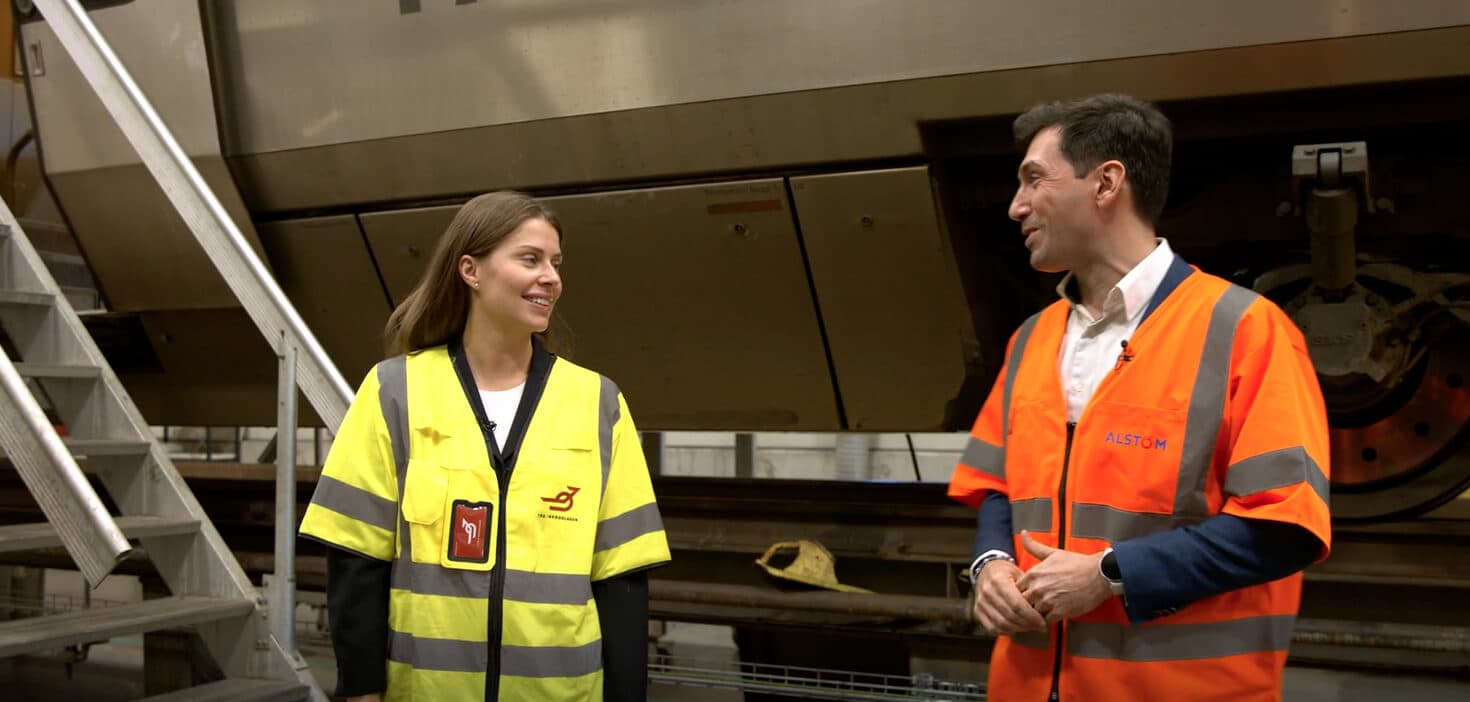
Sára Nožková CEO of Flox & Ricky Smith CEO of Hartsfield-Jackson Atlanta International Airport
Is public safety ever a trade-off at an airport?
No. “Public safety is not a trade-off, right? That is always the ultimate goal,” Ricky said.
In a snowstorm, the airfield side of that is making sure every aircraft lands and takes off safely. He gave deicing as an example. If an aircraft is deiced and then waits too long to take off, it has to go back and be deiced again, which can end in a cancelled flight. Getting that right takes close coordination between the air traffic control tower and ground operations.
Justina described how that priority shows up in budgets. Many airports score proposed projects, and the most points go to anything with public safety implications, so those projects make the cut. The squeeze comes below that line. When an airport is choosing between a new tool with an immediate use and equipment it expects to use in three or four years, the second one often loses.
What does AI have to prove before airports trust it?
“Ultimately we need to be able to trust the AI,” Sára said. That matters most once an airport moves past a pilot. A handful of devices is one thing. A full rollout means thousands of devices observing the environment around the clock, gathering information and eventually making decisions on their own.
The bar she set was simple to say and hard to meet: first as good as the humans doing the job, then better. Getting there depends on the people who already know the airfield. Wildlife and safety teams know how their airport changes with the seasons and the weather, and that knowledge has to be built into the system. “Everything is about data,” she said. “The more data, the better it will be.”
She also asked for some patience from the industry. Every airport Flox works with is different, and conditions can change almost daily depending on season and wildlife activity. Her advice was to agree on the KPIs and metrics early, get the system out on the airfield, and accept that “it’s very hard to have the 100% impact from day one.” The learning curve after that is fast.
Justina Mann, former DFW vice president and Sára Nožková CEO of Flox
Why do good ideas stall inside airports?
Both airport leaders pointed to ownership structure and procurement culture.
Justina walked through the models she has worked in. ATL is owned and operated by the city of Atlanta. Houston is also city-owned, as a three-airport system. DFW and Richmond are airport authorities, and BWI is state-owned. At DFW she helped put together an agreement for a digital twin of the airport’s capital program, a first for the company involved. “I wouldn’t have been able to help them with that if I was at Atlanta,” she said, because a city-owned airport can’t strike those kinds of partnerships as easily.
Ricky agreed that an authority has more flexibility in procurement, hiring and contracting, and in how it structures deals. A city-owned airport sits inside the same bureaucracy as every other city department, even though it is often the only department generating revenue and serving customers directly. “It’s like trying to fit a square peg in a round hole,” he said.
He was clear that this doesn’t come from a lack of talent. “Airports have very talented thinkers, right? They don’t lack the ideas.” The problem starts when the airport is held to the same policies as departments with far fewer resources. “I always call it managing to mediocrity, because an airport doesn’t lack resources.”
Justina had direct advice for technology companies, and we took it personally in the best way. She described an airport where one department bought a software system and wanted it rolled out agency-wide, but nobody else wanted to use it, and procurement was stuck with a tool that didn’t meet its own needs. “You need champions that are more fully informed about how the solution works for the entire system in the airport,” she said. “And IT and AI companies [need to] tighten their pitches up a little bit.” Selling to one business unit, in her words, “is not going to give you that solution.” Then she summed it up herself: “Rule number one: know your customer. Times ten.”
He also named what the panel had been circling: stakeholder buy-in is often the rate-limiting step, more than the technology itself.
“I'm going to describe that legacy system as the airport.”
Ricky SmithCEO of Hartsfield-Jackson Atlanta International Airport
How is AI changing wildlife management at airports?
AI changes two things for wildlife teams. It replaces deterrents animals get used to with signals they keep responding to, and it takes manual patrol and logging work off people who have other safety jobs to do.
Most airports still rely on pyrotechnics, trained falcons, dogs or other frightening devices. “Animals are way too smart,” Sára said. “They will figure it out. They will get used to it in a couple of days.”
Flox takes a different route. Wolves howl and birds sing because those sounds carry meaning for other animals. Until recently nobody could decode much of it. Using generative AI alongside a team of wildlife scientists and bioacoustic experts, Flox pairs the signals animals use with the intent and behavior behind them. “It’s something that we would not have been able to do even last year or two years ago,” she said. She expects the system to decode more in the coming months, and it already works well today.
The hardware, Flox Edge, looks a bit like a wildlife camera. Units are static, placed along a fence perimeter to keep coyotes and foxes out, or near the spots where birds gather around the airfield. One unit covers about 150 feet (roughly 45 meters), so larger areas use several.
Small animals matter too. Sára mentioned a rabbit strike at Denver last year, before the airport started working with Flox, that set an engine on fire and forced an emergency landing. Keeping rabbits and other small animals off the airfield is now part of what Flox does there. The system works across rabbits, coyotes, deer, foxes and many bird species, and even turtles can cause trouble on a runway.
Deployment starts where the problem is worst. “We just pick the hot spots where we know we have the biggest problems with animals,” she said, because that is where impact shows up almost from day one. Flox runs as an extra tool next to what the wildlife team already uses, and expands once it has earned trust. The system is fully automated and doesn’t need to connect to any other airport system, though it can if the airport wants it to.
Justina shared a story about one airport where a staff member sat in a booth all day watching for wildlife, and the booth had to be upgraded with air conditioning because the city was so hot. Hearing about Flox, her reaction was that it could take that job off a person and keep animals away without harming them.
Ricky added the public side of it. Deer strikes are a real issue. Airports want to avoid lethal actions as much as possible. Meaning non-lethal methods carry a PR benefit on top of the safety one. Sára’s word for it was coexistence.
Sára Nožková (Flox), Ricky Smith (ATL), Justina Mann (former DFW)
What airport operators can take from the panel
This is our read, as the vendor in the room.
Build the case before the season starts. Justina and Ricky both described rare events that cost far more than preparing would have. For wildlife, that means logging activity by species and location, so the budget conversation starts from evidence.
Start at the worst hot spot and agree on the metrics up front. A small pilot on the stretch of fence or the grass area where strikes and incursions cluster tells you more in one season than a broad rollout that nobody can measure.
Bring more than one department into the room. Wildlife, airfield safety, operations and procurement all touch a wildlife program. If only one of them has seen the tool, Justina’s warning applies.
Pick methods animals won’t learn to ignore. Habituation is the reason so many deterrents stop working, and non-lethal methods are easier to defend in public.
“Animals are way too smart. They will figure it out. They will get used to it in a couple of days. (talking about current legacy solutions)”
Sára NožkováCEO & Co-Founder Flox Intelligence
Which airports already use Flox?
Flox works with Gerald R. Ford International Airport, Denver International Airport, MidAmerica St. Louis Airport, Greeley-Weld County Airport, Mora Airport and Swedavia, the company that operates Sweden’s national airports.
The longest-running work is with Swedavia. Flox was co-developed and tested at Malmö, Kiruna and Umeå airports between 2022 and 2024, in harsh Nordic conditions, and guided more than 200 animals away from the airfield with 100% deterrence. The animals ranged across predatory birds, geese, foxes and hoofed animals. Read the Swedavia case study.
At Mora Airport in Sweden, magpies and crows have kept clear of protected areas through six months of autonomous operation, and staff spend less time on manual patrols. Read the Mora Airport case study.
At Gerald R. Ford International in Michigan, Flox runs as a layer of wildlife management that watches the runways and perimeter around the clock. Read the Gerald R. Ford International case study.
“Flox Intelligence’s technology represents a significant advancement in autonomous wildlife management, further enhancing airport safety efforts.”
Seth Trasher, Operations Supervisor, Gerald R. Ford International Airport
Across all deployments, Flox has logged more than 60,000 wildlife events across 27 species, and more than 60 operators use the technology on airports, railways, roads and farms. Flox Edge, the device doing the work in the field, detects an animal and responds in under 2 seconds.
Thank you to Spencer Horne for moderating with real curiosity, to Ricky Smith and Justina Mann for their candor, and to the Sand Technologies team for putting airports and physical AI on the same stage at Evolve. Sand published its own recap of the session, AI on the tarmac, which is worth a read too.
Frequently asked questions
What was the “AI on the tarmac” panel?
A panel at Evolve 2026 in Miami, Sand Technologies’ summit series on how AI can solve real-world problems. The session covered how AI works in airport operations, from storm readiness and budgeting to procurement and wildlife management.
Who spoke on the panel?
Ricky Smith, CEO of Hartsfield-Jackson Atlanta International Airport, Justina Mann, former vice president at Dallas Fort Worth International Airport, and Sára Nožková, CEO and co-founder of Flox. Spencer Horne, founder and CEO of Cloudline, moderated.
What did Ricky Smith say about snowstorm preparation at ATL?
He described snow readiness as an insurance policy. Delta lost $60 million on a single Atlanta snowstorm a year earlier, and he believes around $5 million in airport equipment would have reduced that loss considerably.
How does ownership structure affect AI adoption at airports?
Airport authorities such as DFW usually have more flexibility in procurement and contracting than city-owned or state-owned airports, which follow the same rules as other government departments. That can slow down new technology.
Why do bird and wildlife deterrents stop working at airports?
Animals get used to them. Pyrotechnics, trained falcons and other frightening devices often lose their effect within a few days as wildlife learns there is no real threat.
Can small animals like rabbits damage aircraft?
Yes. Sára Nožková described a rabbit strike at Denver, before the airport started working with Flox, that set an engine on fire and forced an emergency landing. Rabbits, turtles, coyotes and deer can all create runway hazards alongside birds.
How does Flox keep wildlife away from airports?
Flox units detect animals with AI and respond with bioacoustic signals matched to the species and its behavior. Because the signals carry meaning for the animal, wildlife keeps responding to them over time. No lethal methods are involved.
Does Flox need to integrate with existing airport systems?
No. The system is fully automated and runs on its own, and it can connect to other airport systems if the airport wants that.
How much area does one Flox unit cover?
About 150 feet, or roughly 45 meters. Larger areas such as fence perimeters use several units.
Which airports use Flox?
Flox works with Gerald R. Ford International Airport, Denver International Airport, MidAmerica St. Louis Airport, Greeley-Weld County Airport, Mora Airport and Swedavia in Sweden. At Swedavia airports, Flox guided more than 200 animals away from the airfield with 100% deterrence.
How does an airport start working with Flox?
Most airports start with a pilot at their worst wildlife hot spot, run alongside the tools the wildlife team already uses, with KPIs agreed at the start. Coverage expands from there.