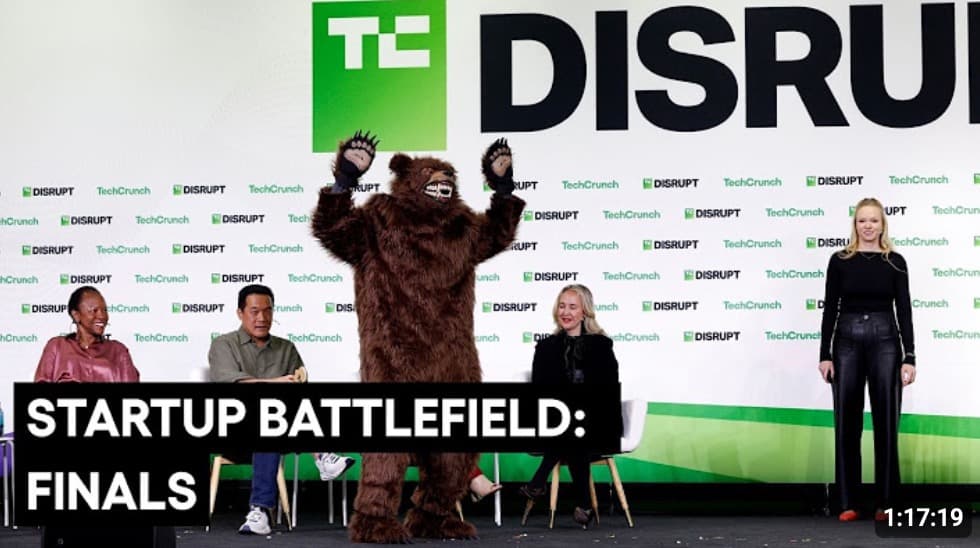
Flox made the top 5 final at TechCrunch Startup Battlefield 2026
In the news
In the news
Flox Intelligence was one of five finalists at TechCrunch Startup Battlefield 2026, the startup competition at TechCrunch Disrupt in San Francisco.
👉 Watch our full pitch in the video above
We were picked from the Startup Battlefield 200, a group that TechCrunch had already cut down from thousands of applications, and we opened the final on October 15 in front of five venture investors. Intero Biosystems took the cup. We came home with a lot of new conversations and a bear that half of San Francisco now seems to recognize.
Years ago, from my (Sara, Founder of Flox) home in Stockholm, I watched the episode of Silicon Valley where Pied Piper pitches at TechCrunch Disrupt. THE tech stage in the world, right in SF. I remember dreaming big of one day making it there. This October I was the first founder to walk onto it in the final.
The short version
Flox Intelligence was one of five finalists at TechCrunch Startup Battlefield 2026, chosen from the 200 companies in the competition.
By our count, no nature tech company had reached the Battlefield final in its 19 years, and no Swedish-founded company had either. This year Flox was both.
We pitched nature intelligence: AI that reads what an animal is doing and answers in signals animals already understand. Flox Edge is the first product built on it. It matters because fences, sirens and pyrotechnics stop working once animals get used to them, and every strike on a runway or collision on a rail line has a real cost. Signals that carry meaning for the animal keep working season after season.
The final judges came from M13, Cherryrock Capital, Construct Capital, Inspired Capital and Goodwater Capital. They asked about bird strikes, ROI, habituation, high-speed trains, buyers and scale.
Intero Biosystems won the $100,000 prize and Apate was runner-up.
If wildlife costs you money on a runway, rail line, road or work site and you want to coexist, talk to our team.
What is TechCrunch Startup Battlefield?
Startup Battlefield is TechCrunch’s competition for early-stage startups, held every year at TechCrunch Disrupt in San Francisco. The winner gets $100,000 with no equity taken, plus the Startup Battlefield Cup.
Here is how the 2026 edition worked. TechCrunch picked 200 companies from thousands of applicants and announced them on August 20 as the Startup Battlefield 200. Those companies got pitch training and masterclasses with operators and VCs, then exhibited at Disrupt. Twenty of them pitched on the main stage. TechCrunch editors went through the judges’ notes and narrowed the twenty to five finalists, who pitched one last time to a final panel.
The competition has been running for close to two decades, and the alumni list is why founders want in. Dropbox, Trello, Cloudflare and Discord all pitched at Battlefield before most people knew their names. Fitbit and Yammer came through it too. According to TechCrunch, more than 1,700 Battlefield companies have raised over $32 billion between them and produced more than 250 exits.
Disrupt 2026 ran from October 13 to 15 at Moscone West in San Francisco. You can read more on the Startup Battlefield page.
Why is a top 5 finish at Startup Battlefield a big deal?
Five out of 200 is 2.5%, and the 200 were already a small slice of thousands of applications, many of them nominated by top-tier VCs from around the world. It was the most competitive year yet.
The part that means most to us is the category. Nature tech usually gets placed in the climate or impact corner of a conference. At Battlefield we were judged on the same terms as the AI and deep tech companies, and we made the same final. The other four finalists were Intero Biosystems, which grows tiny human gut organoids for drug testing, Apate, which sends AI agents posing as scam victims after fraudsters, plus Satlyt and Industrial Next (YC W22).
Standing next to finalists in space computing, organoids and AI fraud agents, I knew one thing: nature tech belongs on the main stage too.
It also matters for the people who manage wildlife risk for a living. Human-wildlife conflict costs a lot of money and gets very little airtime outside the industry. The FAA estimates wildlife strikes cost US civil aviation about $272 million a year on average between 1990 and 2025. France’s rail operator SNCF says wandering animals affect more than 8,000 trains a year. Those figures are easier to bring into a budget meeting once they have been heard on the main stage at Disrupt.
We pitched nature intelligence: an AI layer that lets machines understand what animals are doing and respond in signals the animals already use with each other. Flox Edge is the first product built on it, and trains are next.
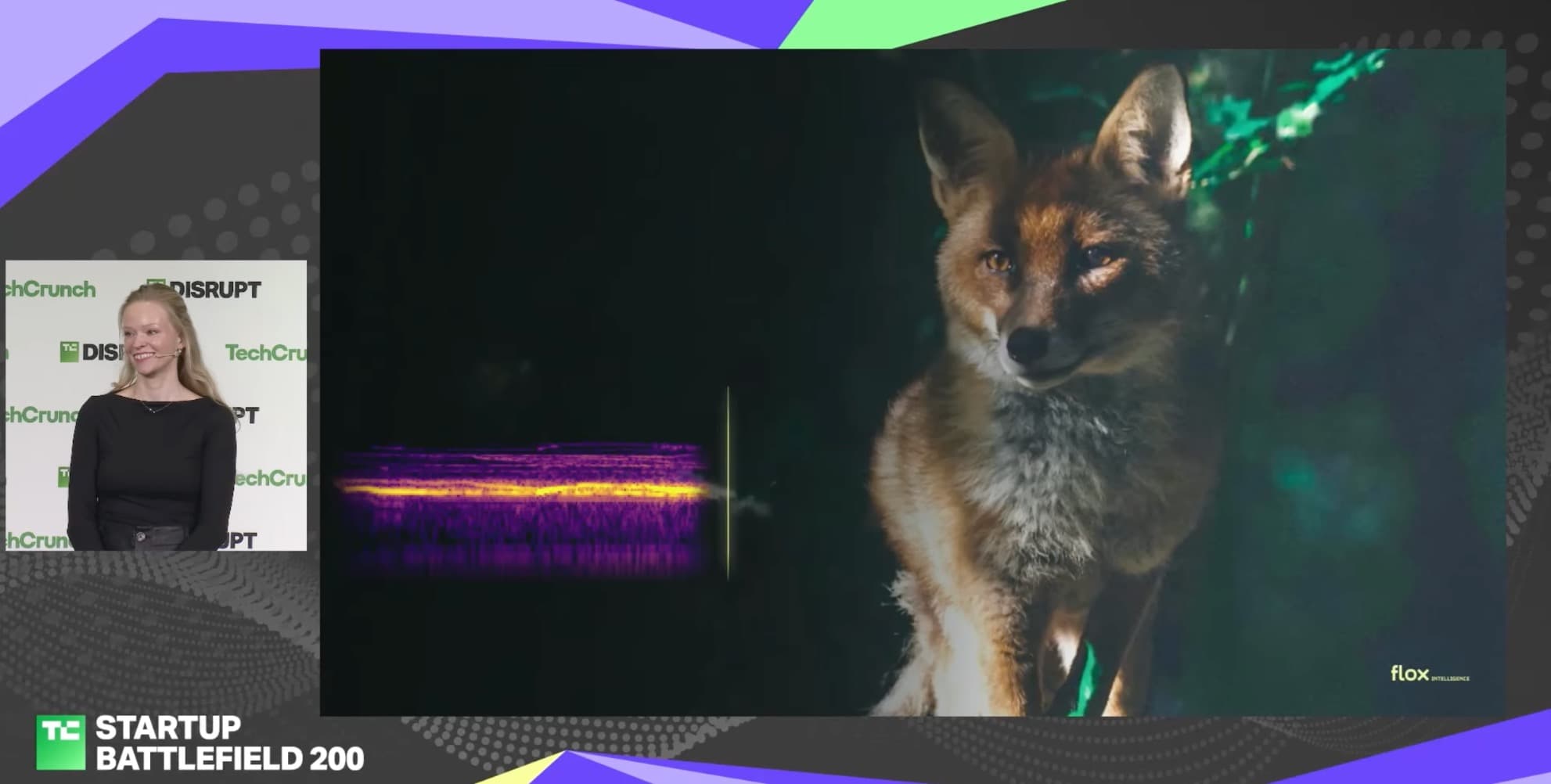
I opened with a recording of animal calls played through the hall. “What you just heard,” I told the room, “is how animals have signaled danger, territory and movement for millions of years.” Some species have names for each other. Some can warn the group about one specific threat, down to a man in a yellow jacket. AI paired with wildlife science is letting people decode that kind of communication for the first time.
I spent 13 years in transportation and autonomous vehicles before Flox. What I learned there is that physical AI works well in places engineered for it, like cities and warehouses, and goes nearly blind once it leaves them. Nature never got an intelligence layer. Human-wildlife conflict is where that gap shows every day, from geese near a runway to a moose on a rail line, and the usual tools are still fences, sirens and pyrotechnics that animals learn to ignore.
How Flox Edge works
We launched Flox Edge in May after five years of validation. It is built for remote sites and runs year-round in any weather. Every encounter goes through the same loop:
It observes the area and detects the species, age, sex and behavior of the animal.
It decides what to do in seconds, on the device, with no cloud connection.
It plays the bioacoustic signal that fits that animal and that situation.
It logs the encounter and feeds it back into the model, so every unit in the fleet gets a little smarter.
The live demo
Then the bear came out. Flox Edge read it as a brown bear, adult male, foraging. As it moved toward the restricted area the readout changed to “approaching restricted area,” and the device responded. A few seconds later the bear was “vigilant,” and then “traveling away.” The room laughed all the way through. Our bear stole the crowd, and for the rest of those days it more or less took over SF.
Where Flox runs today
Flox is deployed on three continents. On stage I named Denver International Airport, Parks Canada, the USDA, national highway operators in Portugal and the Swedish Armed Forces. For two years we have also been testing our software on trains in daily traffic in Europe with Alstom, using the train’s own hardware, and we are now preparing to go commercial together.
Across all deployments, Flox has logged more than 60,000 wildlife events across 27 species, and more than 60 operators use the technology.
The team behind it pairs AI engineers with wildlife biologists. Our operators have built and scaled products at MySpace and Uber, and our scientists hold PhDs in wildlife science and bioacoustics from KTH, Cornell and Syracuse.
What did the Startup Battlefield judges ask Flox?
The final panel was Karl Alomar (M13), Stacy Brown-Philpot (Cherryrock Capital), Dayna Grayson (Construct Capital), Alexa von Tobel (Inspired Capital) and Chi-Hua Chien (Goodwater Capital). Between them they have run DigitalOcean’s operations through its IPO, led operations at Google and TaskRabbit, built and sold LearnVest, and backed companies as partners at NEA and Kleiner Perkins. They asked eight questions in about eight minutes. Here they are, with our answers lightly edited from the stage.
How do you handle bird strikes, with everything else going on at an airfield?
Airports are one of our biggest markets, and they deploy Flox at their hot spots. Birds gather at airports because airfields are wide open grassland, which is exactly what many species like. Flox changes how the birds feel about that particular patch of ground so they settle somewhere else. The same approach works for coyotes and deer, which keep getting onto airfields under or over the fence.
What is the ROI for an airport or for Alstom, and what is the business model?
Every time a train hits a deer or a moose, it costs at least $200,000. The repair is only part of it. The train usually comes out of service for a month or more. Avoiding one or two collisions pays for the system.
At airports we agree KPIs with the customer up front. Much of the value is in time: wildlife and safety staff spend hours on manual patrols when they have other safety work to do, and Flox automates a lot of that while making the airfield safer for passengers.
On the business side, edge units are sold upfront and an annual software and AI subscription starts after the first year. Alstom pays an annual fee to run Flox software on its vehicles.
How much of the market can Flox capture, and in which sectors?
Human-wildlife conflict in infrastructure alone is about a $15 billion market. Wildlife is the wedge. The bigger opportunity is nature intelligence on every machine that works outdoors: trains first, then cars (we are talking to manufacturers), trucks, drones and robotic dogs, where we already hold patents. Flox Home, for gardens and private property, is in development.
Won’t animals figure out it’s a fake and stop reacting?
This came from a judge who has spent ten years fighting the squirrels that raid their backyard orchard, and it is the question I hear most.
Pyrotechnics and loud noises work for a few days, and then the animals habituate. Flox works from how animals have communicated with each other for millions of years: whether a territory is taken, or what an alarm or distress call means. Those signals also come in dialects that change by region. The system keeps adapting. If a signal starts losing effect, we iterate and the model learns. We have run prototypes for several seasons, and season after season we see the behavior change we want, with animals staying away from rail lines and airfields at the times that matter.
Does it work on a moving train at high speed?
Yes. It is the same loop as on a static device: observe, infer what is happening, act (usually with an acoustic signal), observe the outcome, and learn. We then train the model and push it back out locally.
The hardware is different. A train setup has three cameras with much better optics, an onboard GPU and a highly directional speaker, because communicating with an animal from a moving train is a different problem. That is why we work directly with OEMs like Alstom. They own the hardware and retrofit the speakers and cameras we need, for long range and a wide angle, day and night. Flox is the intelligence partner.
Who is the actual buyer?
Airports are where we are focused right now. The buyer is usually the head of safety, or the CEO directly at a regional airport. We also work with departments of transportation, rail operators and other infrastructure owners, mining companies and a global seed producer, and new use cases keep finding us. The more devices in the field, the better the data gets for everyone using them.
How scalable is the software? How much customization does each buyer need?
It scales well. We act locally, train globally and push distilled versions of the model back down to the devices, so every new deployment improves the whole system. The KPI we watch is time to operational intelligence: how long it takes from installing a system until it is effective. Because of that loop, the number keeps getting shorter. We are also automating a lot of the operational work around each deployment.
What is the one thing you do better than the competition?
We actually keep the animals away.
Who should talk to Flox?
If wildlife costs you money or downtime, we would like to hear about your site. Most of the operators we work with today fall into one of these groups:
Airports dealing with geese, raptors, crows, coyotes, foxes, deer or rabbits on and around the airfield. See how Flox works for airports and the Swedavia case study, where Flox guided more than 200 animals away from three airfields.
Rail operators losing trains and timetable minutes to moose, deer and bears.
Highway operators and departments of transportation trying to cut deer or bison collisions.
Mining companies, energy sites and electrical substations.
Farms, ranches and seed producers protecting crops and livestock.
Most projects start small, at your worst hot spot, running next to the tools your team already uses, with KPIs we agree on before the first unit goes in. Coverage grows once the numbers are in.
Talk to our team about a pilot. Tell us where the problem is and which animals are involved, and we will come back with what a first deployment would look like.
If you are an investor in infrastructure, industrial hardware, applied AI or nature tech, the same page reaches us. We are opening a $10 million Series A.
Thank you
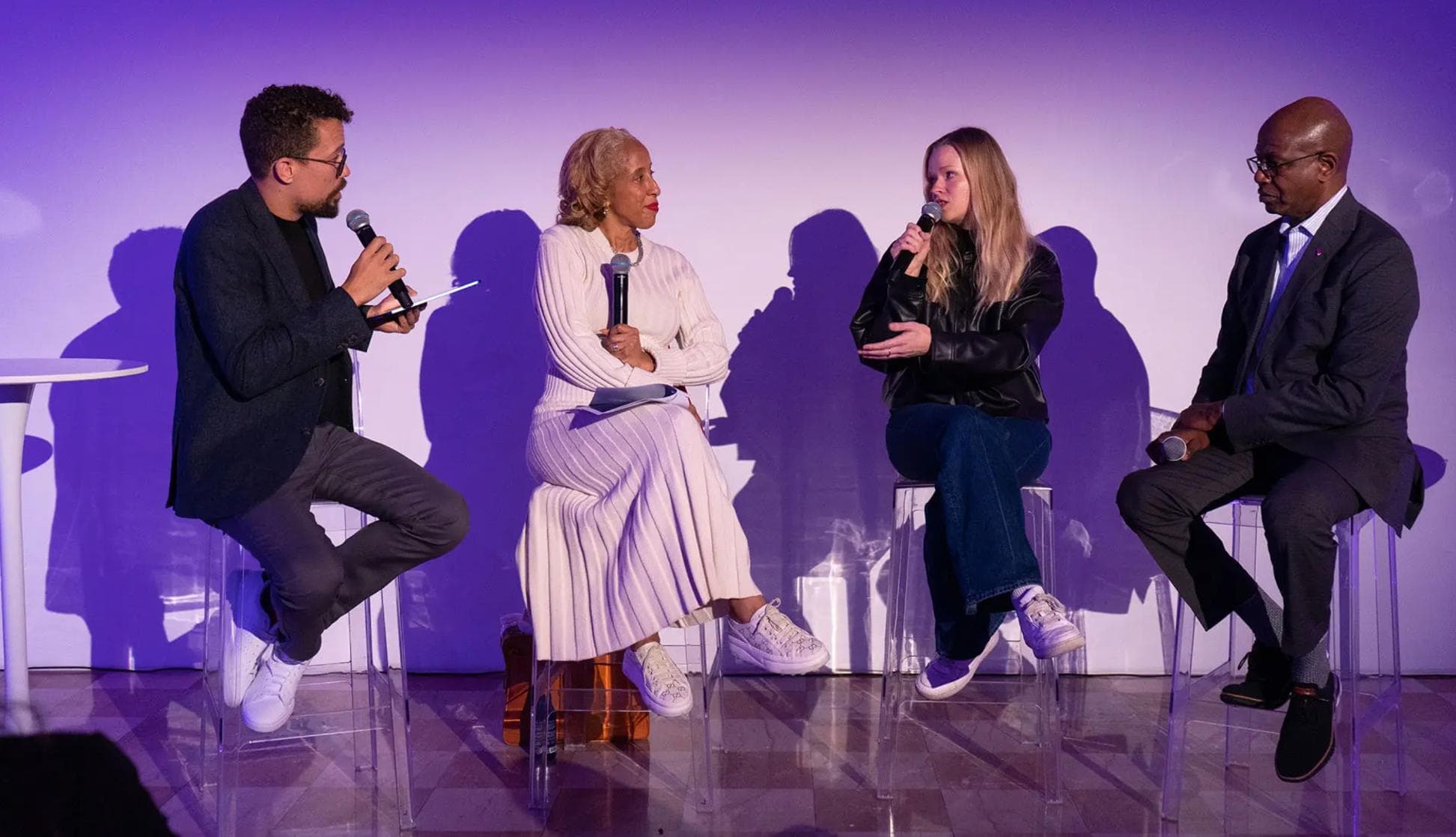
To Tomas Becklin and Fernando Cossío Ramírez for the support on stage, and to our teams in Syracuse and Stockholm who were watching live. To our customers, backers, partners and the TechCrunch Battlefield crew. To Ram Iyer for the interview. And congratulations to Intero Biosystems on the win, and to Apate, Industrial Next and Satlyt. I will never forget this week.
Frequently asked questions
What is TechCrunch Startup Battlefield?
Startup Battlefield is TechCrunch’s annual competition for early-stage startups, held at TechCrunch Disrupt in San Francisco. TechCrunch selects 200 companies from thousands of applications, 20 pitch on the main stage, and five reach the final. The winner gets $100,000 with no equity taken and the Startup Battlefield Cup.
Which companies were the five finalists at Startup Battlefield 2026?
Flox Intelligence, Intero Biosystems, Apate, Industrial Next and Satlyt. Intero Biosystems won and Apate was runner-up.
Who won TechCrunch Startup Battlefield 2026?
Intero Biosystems, a Denver-based startup that grows human intestinal organoids for testing drugs and other compounds. It won the $100,000 prize at TechCrunch Disrupt 2026 on October 15.
Who judged the Startup Battlefield 2026 final?
Karl Alomar of M13, Stacy Brown-Philpot of Cherryrock Capital, Dayna Grayson of Construct Capital, Alexa von Tobel of Inspired Capital and Chi-Hua Chien of Goodwater Capital.
Has a nature tech company reached the Startup Battlefield final before?
Not by our count. In the 19 years of Startup Battlefield, Flox Intelligence is the first nature tech company to reach the final, and the first Swedish-founded company to do so.
What does Flox Intelligence do?
Flox builds AI that detects wildlife in real time and moves animals away from danger using bioacoustic signals they already respond to. It is used at airports, on railways and roads, on farms, at mining and energy sites and on public land. No fences or lethal methods are involved.
How does Flox Edge work?
Flox Edge observes an area, identifies the animal’s species, age, sex and behavior, decides on the device within seconds with no cloud connection, and plays the bioacoustic signal that fits that animal. Each encounter is logged and used to improve the model for every unit.
Why don’t animals get used to Flox?
Pyrotechnics and loud noises stop working once animals learn there is no real threat. Flox uses signals drawn from how animals communicate with each other, adapts them to region and context, and changes its response when a signal starts losing effect.
Does Flox work on trains?
Yes. Flox has tested its software on trains in daily traffic in Europe for two years with Alstom, using the train’s own cameras and speakers, and the two companies are preparing to go commercial together.
Who buys Flox?
At airports it is usually the head of safety, or the CEO at a regional airport. Other customers include departments of transportation, rail operators and manufacturers, mining companies, land managers and a global seed producer.
How do I start working with Flox?
Most operators start with a pilot at their worst wildlife hot spot, with KPIs agreed up front. Contact the team at with your site and the animals involved.