Flox on Czech Television: AI for wildlife coexistence
In the news
In the news
Most AI conversations I hear right now are about fear, mostly about jobs and who stays in control. Those fears are fair. I just think they leave out the animals.
So I was glad when Česká televize asked Flox Intelligence to join Bilance: Na prahu AI apokalypsy ("On the brink of an AI apocalypse"). The documentary aired on ČT1 on November 9, 2026, and takes 26 minutes to look at where AI is taking us and what could go wrong. My part starts at 17:25.
My point was simple. AI can help us understand our furry neighbors on a whole new level, and once we do, people and wildlife can coexist in ways that aren't possible today.
The short version
Czech Television aired Bilance: Na prahu AI apokalypsy on ČT1 on November 9, 2026. It is a 26-minute documentary about where AI is heading and what could go wrong.
Her point: AI can help people understand wild animals on a much deeper level, and that understanding can lead to a kind of coexistence between people and wildlife that doesn’t exist today.
Flox already does this in the field. Its AI detects animals in real time and guides them away from danger with bioacoustic signals (sounds based on how animals communicate with each other).
If wildlife costs you money or downtime at an airport, rail line, road or work site, talk to our team.
What is Bilance on Czech Television?
Bilance is a current affairs series from Czech Television, the Czech public broadcaster. ČT reporters dig into the biggest economic challenges and shocks of the moment and ask how big numbers shape the future of ordinary people. Episodes air on ČT1 and ČT24, and the series also runs as a podcast on Spotify, Apple Podcasts and YouTube.
Recent episodes in 2026 covered aviation, agriculture, the energy. This one was all about AI.
What was “Na prahu AI apokalypsy” about?
Na prahu AI apokalypsy translates to “On the brink of an AI apocalypse.” The episode asks two questions a lot of people are asking right now: where is AI taking us, and what could go wrong along the way?
The fears are real and worth discussing. I’m glad a public broadcaster gave the topic a full episode. I also wanted viewers to walk away with a picture of what the good version could look like.
“AI doesn't have to be about replacing us. It can help us understand our furry neighbors on a whole other level. With that understanding, we can co-adapt to nature and reach a kind of coexistence that doesn't exist today.”
Sára NožkováCEO Flox Intelligence
What did Sára Nožková say about AI and wildlife?
I had one point to make. Here is how I put it on the night of the broadcast:
“AI doesn’t have to be about replacing us. It can help us understand our furry neighbors on a whole other level. With that understanding, we can co-adapt to nature and reach a kind of coexistence that doesn’t exist today.”
Most AI debates circle around jobs and control. Far fewer people talk about what AI could do for the relationship between people and wild animals.
Animals talk to each other all the time. Wolves, red deer, foxes and greylag geese use calls to warn about danger, claim territory and keep the group together. Some species can even warn the group about one specific kind of threat. For most of history, people couldn’t make sense of any of it. AI paired with wildlife science is changing that, and fast.
Outside the research lab, this has very practical uses. Today, when deer keep crossing a rail line or geese settle next to a runway, the usual answers are fences, sirens and pyrotechnics. Animals get used to the noise within days. When that stops working, the animals are often shot.
Understanding gives us a better option. If a machine can read what an animal is doing and answer in a signal that animal already understands, the animal moves on by itself and lives. People keep their runways and rail lines safe. That is what I mean by co-adapting: both sides adjust, and nobody has to lose.
Why talk about wildlife in a show about the AI apocalypse?
Because the future of AI is still open, and I’d rather help build the good version than only warn about the bad one.
I spent 13 years in transportation and autonomous vehicles before Flox. Physical AI (AI that runs machines in the real world, like robots and self-driving cars) works well in places built for it, like cities and warehouses. Once it leaves them, it is close to blind. Nature never got an intelligence layer. Human-wildlife conflict is where that gap shows up every day, from a moose on a rail line to a fox on an airfield.
There was also a more personal reason. Animals can’t go on television and explain themselves. Thank you to Česká televize for having Flox in the conversation, where I could speak for those whose voices are harder to hear. For now, at least.
How does Flox use AI to understand animals?
Flox builds what we call nature intelligence: AI that reads what an animal is doing and answers in signals animals already use with each other. Our first product, Flox Edge, runs at remote sites year-round in any weather. Every encounter follows the same loop:
It observes the area and detects the animal’s species, age, sex and behavior.
It decides what to do in seconds, on the device, with no cloud connection.
It plays the bioacoustic signal that fits that animal and that situation.
It logs the encounter and feeds it back into the model, so every unit gets a little smarter.
Because the signals carry meaning for the animal, they keep working season after season, long after sirens and pyrotechnics have worn off.
Flox runs on 3 continents, at sites including Denver International Airport, Parks Canada, the USDA, national highway operators in Portugal and the Swedish Armed Forces. With Alstom, we have tested our software on trains in daily traffic in Europe for 2 years. Across all deployments, Flox has logged more than 60,000 wildlife events across 27 species, and more than 60 operators use the technology.
If wildlife costs you money or downtime, we’d like to hear about your site. Most of the operators we work with run one of these:
Airports dealing with geese, raptors, crows, coyotes, foxes or deer on the airfield. See how Flox works for airports and the Swedavia case study, where Flox guided more than 200 animals away from 3 airfields.
Rail lines losing trains and timetable minutes to moose, deer and bears.
Highways and roads with deer and bison collisions.
And now we even help to protect your flowers and produce in your own home.
Most projects start small, at your worst hot spot, with KPIs (the numbers we agree to measure success by) set before the first unit goes in.
Talk to our team about a pilot. Tell us where the problem is and which animals are involved, and we’ll come back with what a first deployment could look like.
Frequently asked questions
What is Bilance: Na prahu AI apokalypsy?
It is a 26-minute documentary episode of Bilance, a current affairs series from Czech Television (Česká televize). The title means “On the brink of an AI apocalypse.” The episode looks at where AI is taking us and what could go wrong.
When did Bilance: Na prahu AI apokalypsy air?
On November 9, 2026, on ČT1.
Where can I watch the episode?
On Czech Television’s streaming service iVysílání, at ceskatelevize.cz. The episode is in Czech. Sára Nožková of Flox Intelligence appears from 17:25.
Who is Sára Nožková?
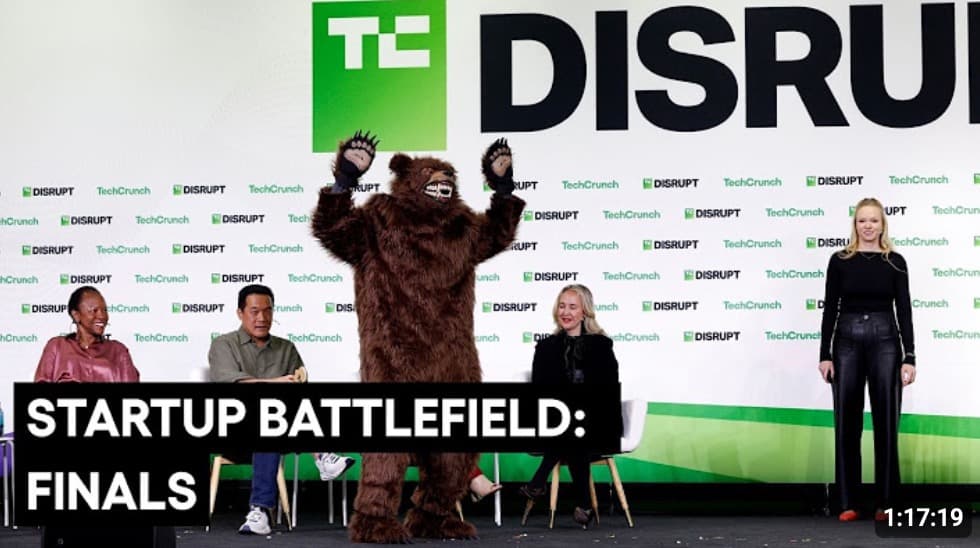
Sára Nožková is the co-founder and CEO of Flox Intelligence. She spent 13 years in transportation and autonomous vehicles before Flox, and she led the company into the top 5 at TechCrunch Startup Battlefield 2026.
What did Sára Nožková say on Czech Television?
She argued that AI doesn’t have to be about replacing people. It can help us understand wild animals on a much deeper level, and with that understanding people can co-adapt to nature and reach a kind of coexistence with wildlife that doesn’t exist today.
Can AI help people and wildlife coexist?
Yes. AI can detect animals in real time, read their behavior and respond with signals they already understand. Flox uses this to guide animals away from runways, rail lines and roads, so people stay safe and the animals stay alive.
What does Flox Intelligence do?
Flox builds AI that detects wildlife in real time and moves animals away from danger using bioacoustic signals they already respond to. It is used at airports, on railways and roads, on farms, at mining and energy sites and on public land.
Does Flox harm animals?
No. Flox guides animals away from risky areas with sound signals based on how animals communicate with each other. No lethal methods are involved.