$40 billion.
That is the price we pay every year when cars, trains, and planes crash into wild animals. And it is getting worse.
Never heard that number before? Don’t worry. Coexistence between people and wildlife still flies under the radar. Most of us only notice the problem when a moose ends up on a train track or a bird meets an aircraft.
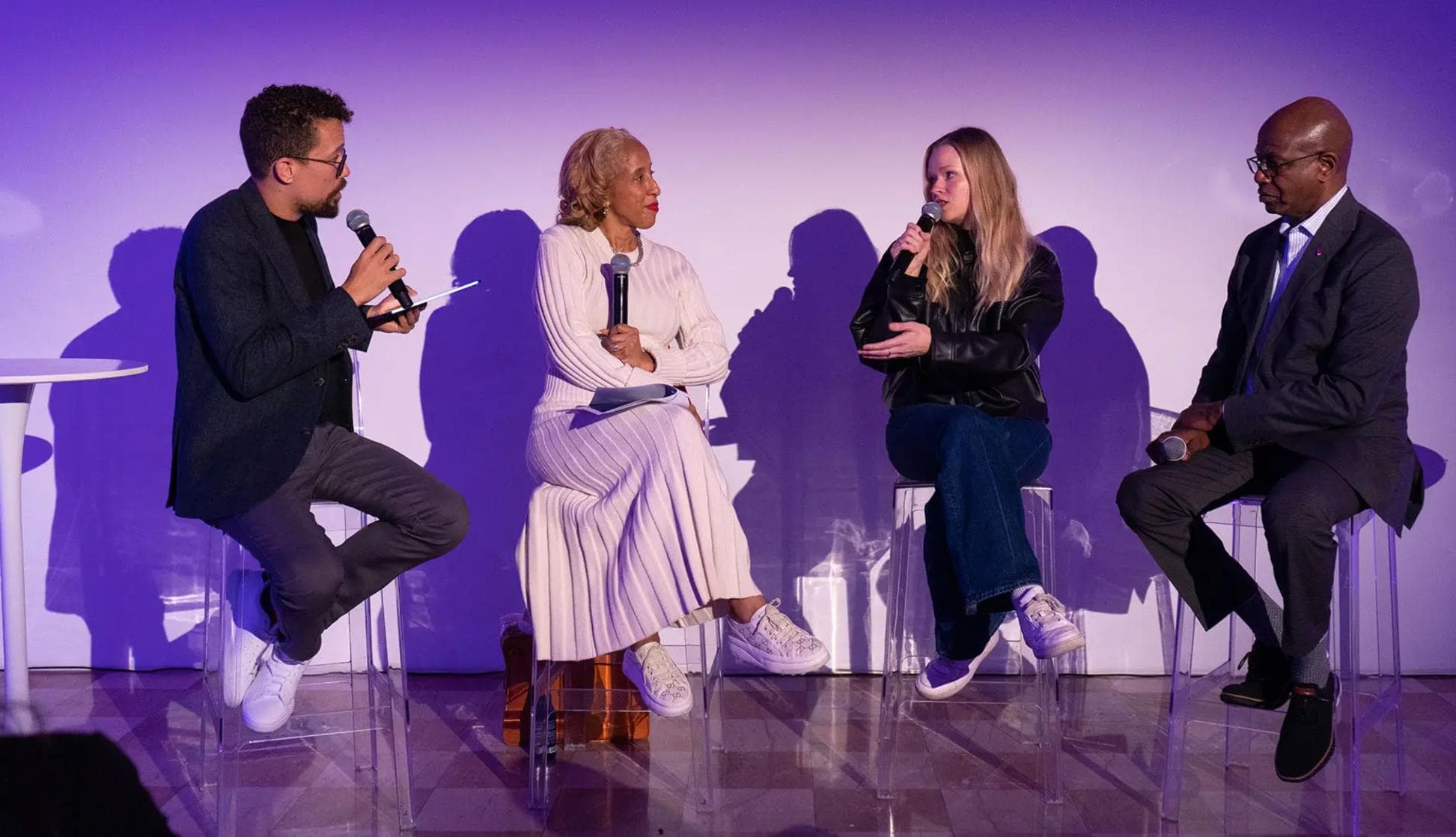
So we felt lucky to talk about it on stage at EVOLVE, Sand Technologies’ AI summit in Miami, in front of 300+ leaders. We got to share how Flox translates wildlife language to keep animals, and people, safe.
Our goal was never to beat wildlife. It was to share the space with them.
👉Watch our full pitch here (from 19:00 minute).
Why does a $40 billion problem stay invisible?
Because it happens quietly, one animal and one vehicle at a time.
A single serious collision can cost well over $1 million. It can also freeze a whole community’s movement in minutes: delays, emergency response, cancelled routes, and a hit to reputation that lasts far longer than the traffic jam. Add it all up across roads, railways, and runways, and you get that $40 billion.
Wildlife is running out of room while our infrastructure gets faster and busier. Trains and moose end up on the same track. Birds and planes end up in the same sky. For a long time everyone shrugged it off as bad luck. It was never bad luck. It was a gap nobody owned.
Why don’t the old wildlife deterrents work?
Most tools on the market are about 100 years old. Think pyrotechnics (loud bangs and flares) and scarecrows.
They fail for two simple reasons. First, animals habituate, which is a fancy word for “they get used to it and stop caring.” A noise that terrifies a deer on Monday is background noise by Friday. Second, these methods are labor-heavy and blind. They fire the same way every time and learn nothing.
So the animal comes back. And too often, the last resort is killing it. That never sat right with us.
“So the animal comes back. And too often, the last resort is killing it. That never sat right with us.”
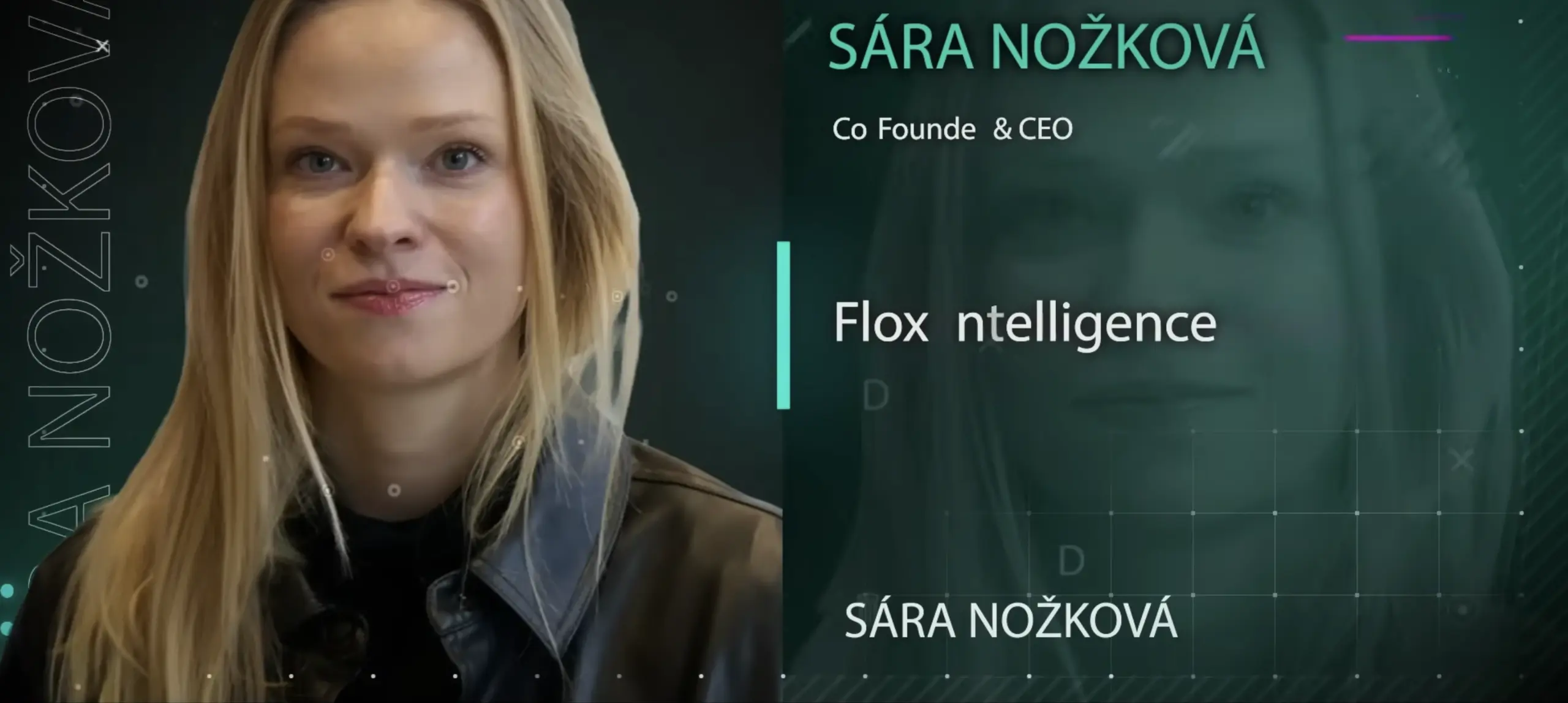
Sára NožkováCEO Flox Intelligence
What if we could talk to wildlife in their own language?
But animals are already talking, almost constantly.
They warn each other about danger. They argue over territory. They call out for fun. Some species even have names for each other. It is a rich, layered way of communicating, and we have mostly been ignoring it.
With recent progress in artificial intelligence, we can finally start to decode what they have been saying all along. We use bioacoustics (reading the sounds animals make) and applied wildlife science, then let AI find the patterns. Once you understand the signal, you can send one back. You can tell an animal, in a way it actually understands, “this is a danger zone, stay away.” No harm. No habituation.
We do things differently. We stopped trying to frighten wildlife and started communicating with it.
Meet Flox Edge, a translator that lives in the field
We built a new communication layer for infrastructure, and it lives outside in the real world.
Flox Edge is our intelligent wildlife deterrent. “Edge” means the AI runs right there on the unit, in the field, not in some faraway data center. It is built for brutal conditions: remote sites, storms, extreme heat and cold. It carries the longest battery life and the longest range on the market.
Each unit watches its surroundings and guides animals away from danger, and it learns from every single interaction, so it gets sharper the longer it runs.
It is multispecies and multimodal, which is a long way of saying one unit speaks differently to a goose than it does to a deer, or even a mountain lion. And everything it sees and does gets logged into the Flox platform, where we can generate regulatory-ready reports for authorities.
Flox Edge senses the animal, analyzes what it is saying, and acts in real time.
Does it actually work?
Yes. So far we have guided more than 60,000 animals away from critical infrastructure and danger zones.
That is tens of thousands of moments where an animal was not on a runway, a train track, or a road. Moments where nobody got hurt and nothing got destroyed.
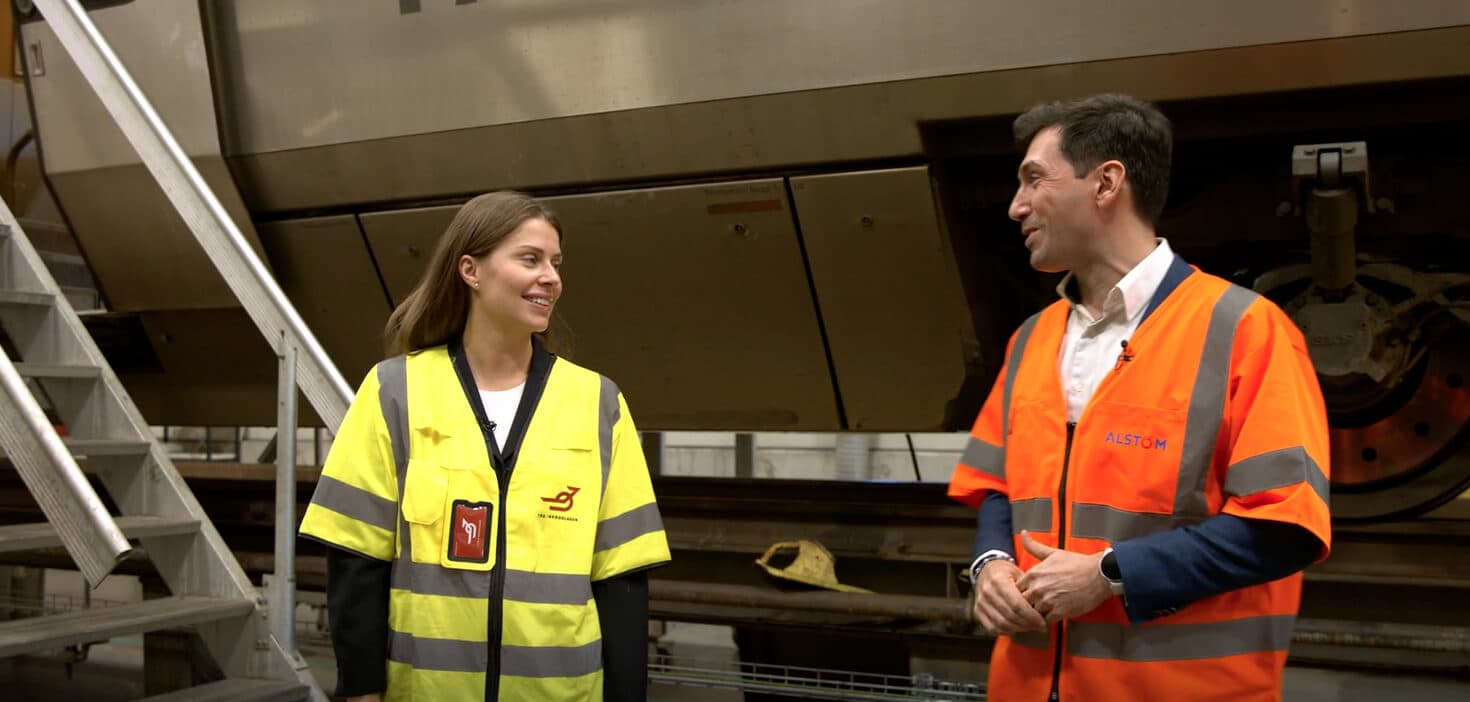
Today more than 60 operators trust Flox across North America and Europe, including major airports, infrastructure owners, and mobility leaders like the rail giant Alstom. We are a global team with roots in Stockholm, where Sara spun the company out of an AI lab at KTH in 2020, and a global HQ in Syracuse, New York.
Why coexistence, not conquest?
Because wildlife is not the enemy, but our flat mate.
We love both sides of this collision, the technology and the wildlife, so watching them crash into each other was hard to watch. Fences get walked around. Noises get ignored. Killing solves nothing and costs us a piece of the wild we can never get back.
A world where humans and wildlife share the same ground without one paying the price for the other. That is the whole point. That is what we mean when we say we turn wildlife communication into coexistence.
Frequently asked questions
What is human-wildlife coexistence?
It is people and wild animals living in the same areas without constant conflict. In practice, that means preventing collisions, crop damage, and disruption while keeping the animals alive and free.
How does Flox keep animals away without harming them?
Flox reads how animals communicate, then sends signals they naturally understand to guide them away from danger zones. There is no physical harm, and because the system adapts, animals do not habituate the way they do with old scare devices.
Where can Flox Edge be used?
Airports, roads and highways, railways, farms and livestock operations, conservation land, and energy sites. Anywhere fast infrastructure and wildlife share space.
Why don’t traditional deterrents like pyrotechnics work long term?
Animals get used to repeated, predictable threats and stop reacting. These methods also do not learn or record data, so they cannot improve or prove results to regulators.
How many animals has Flox guided to safety?
More than 60,000 so far, across 60+ operators in North America and Europe.
Your move
If you run an airport, a railway, a road, or a farm, and wildlife is a daily headache, you do not have to choose between safety and doing the right thing.
👉 Talk to us. Book a demo and we will show you what Flox Edge can do on your site
Let’s build landscapes where both sides get to stay.
This piece is based on Sara Nozkova’s talk at EVOLVE, Sand Technologies’ summit series on AI for real-world infrastructure, in the “Embodied Intelligence at Work” session.